

Unlocking the Future with STEM
STEM Programmes for Schools
At Acorn Training, we are passionate about equipping students with the knowledge and skills that underpin science, technology, engineering and mathematics. Our STEM programmes for schools go beyond technical skills: they encourage creativity, critical thinking and practical problem solving through real-world applications, from building robots out of chopsticks to designing their own websites with AI.
Why STEM Matters
Science, technology, engineering and mathematics are the cornerstones of innovation and progress. By developing these competencies early, students gain a deep understanding of how the world works and how they can shape it through curiosity, experimentation and critical thinking. STEM is not just about facts and formulas; it teaches students how to question, design, test and improve.
Through hands-on learning and interdisciplinary approaches, students learn to think logically, work collaboratively and innovate fearlessly. Our programmes prepare them for future careers in science and technology while building transferable skills such as perseverance, reasoning, resilience and creativity.
Our Approach: STEM and Design Thinking
We believe STEM education is most powerful when combined with design thinking. It gives students a structured yet flexible pathway for innovation, helping them approach problems with empathy, creativity and structured reasoning. Whether they are building robots, coding games or designing websites, students are guided to:
- Empathise with real-world problems by understanding the needs of the people or environments they are designing for
- Define the central challenge based on meaningful observation and research
- Ideate a range of possible solutions through brainstorming and collaborative exploration
- Prototype their ideas using robotics kits, circuit boards or coding tools
- Test their creations, gather feedback and refine their designs

This cycle fosters curiosity, adaptability and reflective thinking, and mirrors the processes used by engineers, designers and innovators in real professional environments. Students do more than learn about technology: they learn to think creatively, strategically and empathetically.
Our Programmes
We offer a range of engaging, future-focused programmes, with an age-appropriate entry point for every learner:
- Stick ‘Em Robotics: hands-on engineering and robotics challenges using the award-winning Stick ‘Em kits
- Web and Mobile Development with AI: students design and build their own websites using real coding skills and AI-assisted tools
- Elite Coder: Certified Coding: a structured, globally recognised coding certification, from beginner to advanced
- Coding Adventures: game-based coding for younger learners on the CodeMonkey platform
- Magic Bit STEM Projects: combine coding, electronics and engineering to build smart devices and interactive projects
- AI in Learning: learn to use AI tools to study smarter, research faster and enhance learning across all subjects
Stick ‘Em Robotics
Empowering Learners with Creative, Hands-On STEM
The award-winning Stick ‘Em kit is a practical, challenge-driven resource that is transforming how schools engage with STEM. The kits are intentionally simple and highly accessible, combining everyday materials such as wooden chopsticks with electronic components. This low-barrier approach makes STEM achievable for all schools, including those with limited resources, while encouraging experimentation, invention and discovery.
Each kit brings together lightweight wooden sticks with motors, switches, batteries, small control modules and a variety of sensors. Because the kits are modular, pupils can explore a wide range of engineering and robotics ideas: how movement is created and controlled, how sensors trigger actions, how circuits work and how different systems interact. They progress naturally from basic mechanisms to advanced interactive builds, using materials that are safe, intuitive and budget friendly.
Our curriculum-aligned activities let schools deliver meaningful STEM lessons without needing deep technical knowledge. Pupils design, build, test and refine their creations, turning the classroom into a compact innovation space.
What Pupils Can Build
- Smart gantry systems that lift and move objects with impressive accuracy
- A motorised, remote-controlled dustbin whose lid opens automatically when a sensor detects a hand
- Remote-controlled vehicles designed and built from scratch
- Obstacle-detecting robots that change direction when they sense an object
- Light-responsive models that react to changes in their environment
- Mechanical grabbers, picking arms and small conveyor systems
- Drawing robots that create patterns through motion-based mechanisms
- Wind-powered structures and simple motion- or proximity-triggered alarms

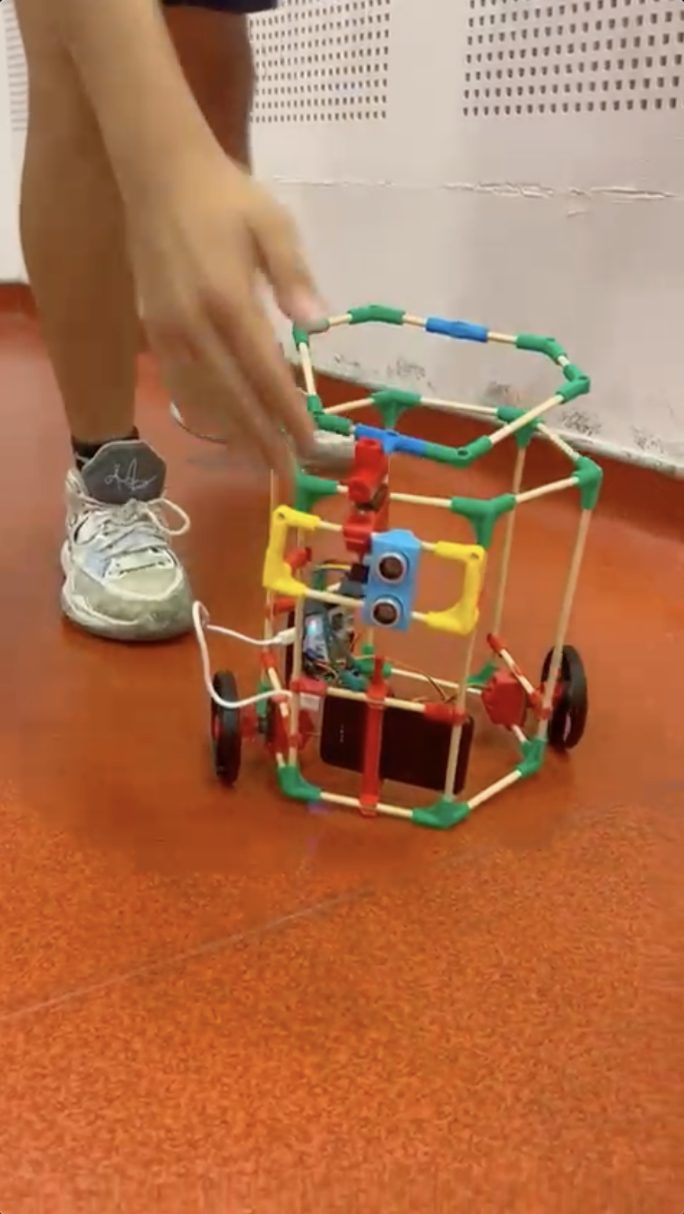
Every project can be adapted and extended, so pupils keep experimenting and creating more advanced designs as their skills grow.
Web and Mobile Development with AI


With the rise of AI-powered development tools, building a website has become more accessible than ever. Students no longer need years of coding experience to bring an idea to life: AI assistants help generate layouts, guide code structure, explain concepts and speed up the creative process. In a remarkably short time, learners produce their own working websites and gain confidence as both creators and problem-solvers.
What Students Can Build
- Personal portfolio sites to showcase achievements, hobbies or artwork
- Pages for their CCA or school activities
- Informational sites on topics they care about, such as sports, wellbeing, sustainability or gaming
- Mobile-friendly prototypes for imagined apps or services
- Sites with interactive galleries, menus or animations
- Event pages for school initiatives, fundraisers or competitions
Tools and Technologies
- HTML, CSS and JavaScript: the building blocks of web and mobile interfaces
- Responsive design: so websites work smoothly across devices
- AI coding assistants such as Lovable: to scaffold components, debug code and suggest improvements
- VS Code: the code editor for writing and managing files
- Browser DevTools: for testing ideas and understanding how pages behave
- GitHub (optional): for saving and sharing finished projects
These tools mirror real-world development environments. Students also learn when to rely on automation, when to write code by hand and how to judge the quality of what AI produces.
A Foundation for Future IT Pathways
Understanding how digital products are built turns students into creators rather than just consumers of technology. It gives them an early stepping stone into front-end development, UI/UX design, software engineering, mobile app development, digital product design, tech entrepreneurship, and the basics of cloud and DevOps. Whether they later pursue computing, design, engineering or digital business, these foundations support a wide range of careers.
Coding for Younger Learners
For students just beginning their coding journey, these programmes build confidence and prepare them for more advanced technology skills.
- Elite Coder: Certified Coding. A structured three-level certification programme developed in partnership with Singapore Science Centre Global and mangoSTEEMS. It follows international standards such as CSTA and Common Core, giving students a strong, globally recognised foundation in programming.
- Coding Adventures. Interactive, game-based learning on the CodeMonkey platform. Through challenges, puzzles and playful activities, students build critical thinking, problem solving and coding confidence; ideal for younger learners taking their first steps into the digital world.
Optional AI Modules
Every STEM programme can include an optional artificial intelligence component, introducing students to how AI is shaping the future in an age-appropriate and engaging way. Students explore generative AI, smart robotics and natural language processing, and discover how AI systems gather information, recognise patterns, make decisions and support everyday technologies.
We also cover the responsible use of AI, including ethical considerations, algorithmic bias and data privacy, so young learners build digital confidence alongside a thoughtful understanding of emerging technology. The modules are in line with the Smart Nation 2.0 initiative, including IMDA’s AI for FUN (Primary) and AI for FUN (Secondary).

Partner with Acorn Training
Our experienced tutors, flexible course structures and engaging content make it easy to bring future-ready learning into your school. We provide all the resources, equipment and support needed to make an immediate and lasting impact, so your students can think critically, build creatively and solve real-world problems.
Empower your students with the skills, mindset and confidence to thrive in a STEM-driven future.


